

Compliance Management Software in 2026: The Best Platforms to Stay Audit-Ready

Table of Contents
The cost of compliance failure has never been higher. As regulations multiply and audits become more demanding, organizations can no longer rely on spreadsheets, email threads, and manual reminders to manage compliance. The question is no longer whether you need compliance management software, but how fast you can put the right system in place.
Imagine centralizing controls, evidence, policies, and audit workflows in one place — while reducing manual work and staying ready for SOC 2, ISO 27001, GDPR, HIPAA, PCI DSS, or other frameworks that matter to your business. That is what modern compliance management software delivers. From fast-growing startups to regulated enterprises, the companies that stay ahead are the ones that make compliance continuous, not reactive.
We’ve curated the leading compliance management software platforms that help teams automate evidence collection, map controls, monitor risk, and simplify audit preparation. Each platform has been selected for its practical impact on real compliance challenges — from framework mapping and continuous monitoring to policy management and risk assessments. Whether you’re building your first compliance program or scaling an enterprise GRC function, these tools represent the gold standard of the industry.
Welcome to the era of continuous compliance — where audit readiness is built into daily operations, not scrambled together once a year.
What Is Compliance Management Software?
Compliance management software is a platform that helps organizations track, automate, and document their adherence to regulatory requirements, industry standards, and internal policies. It replaces manual spreadsheets and scattered evidence with a centralized system that maps controls to frameworks, monitors risk in real time, and prepares audit-ready documentation on demand.
At their core, these platforms cover four critical pillars: control mapping (aligning internal processes with frameworks like SOC 2, ISO 27001, HIPAA, and GDPR), evidence automation (continuously collecting proof of compliance from connected systems), risk management (identifying, scoring, and tracking risks across the organization), and policy and task management (ensuring employees follow required procedures and complete compliance obligations on time).
The distinction between tool categories matters. Some platforms focus on security compliance automation for SaaS and tech companies (e.g., Vanta, Drata, Secureframe), while others offer full-stack governance, risk, and compliance (GRC) management for large, multi-framework enterprises (e.g., MetricStream, OneTrust, Wolters Kluwer TeamMate). Choosing the right type depends on your industry, regulatory exposure, and internal compliance maturity.
📖 Want to go deeper? Read our broader research and technology coverage for business decision-makers: Infomineo Insights →
Best Compliance Management Software in 2026
Compliance is not a checkbox exercise — it is the operating discipline that protects trust, data, and the business itself.
1. Vanta
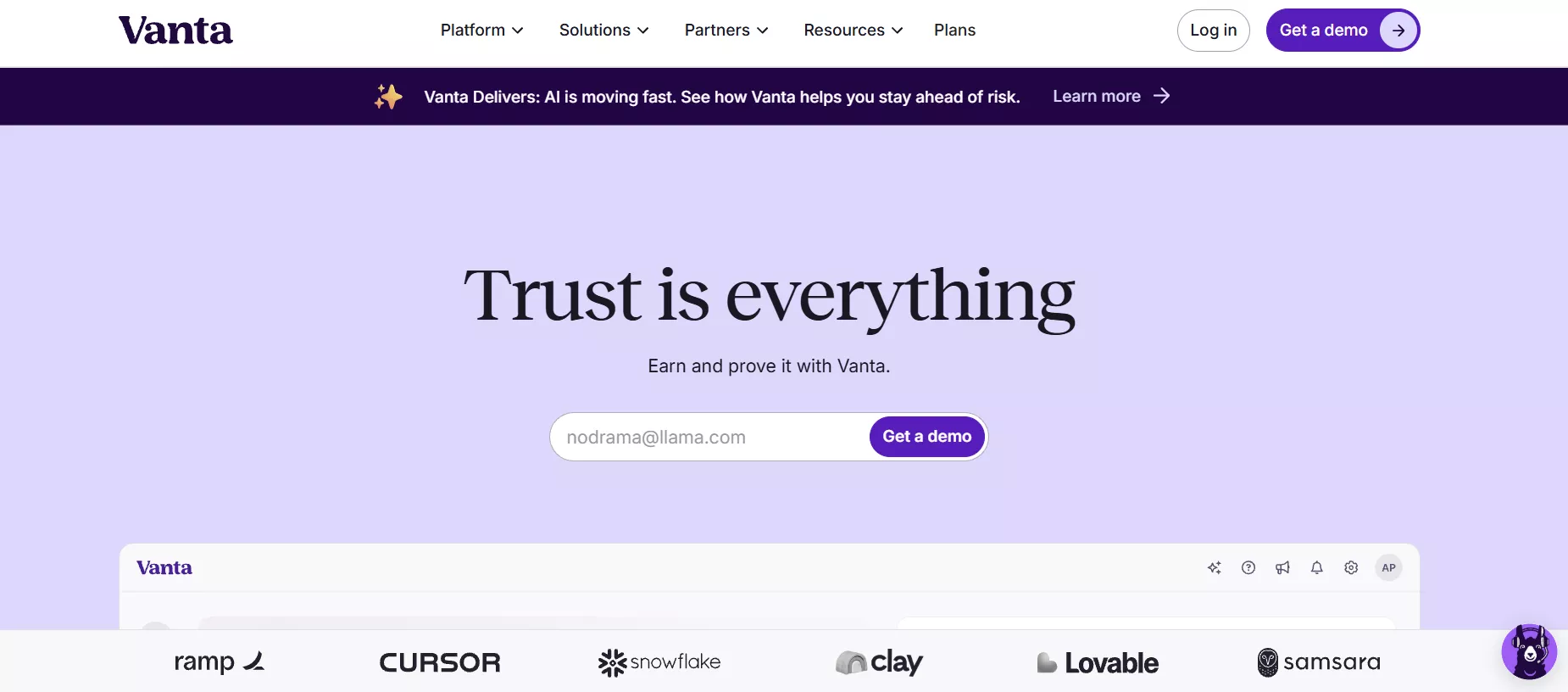
Vanta is one of the most widely adopted compliance automation platforms for SaaS and tech companies, continuously monitoring cloud infrastructure and collecting evidence to keep organizations audit-ready for SOC 2, ISO 27001, HIPAA, GDPR, and dozens of other frameworks.
Pros:
- Automated evidence collection across 300+ integrations with cloud, HR, and IT tools.
- Trust Center feature lets you showcase compliance status directly to prospects.
Cons:
- Pricing scales quickly as you add frameworks and integrations.
- Best suited for tech-first companies — less tailored for traditional enterprise GRC.
Pricing:
Custom pricing based on frameworks and company size; demo required for quotes.
2. Drata

Drata offers continuous control monitoring and automated evidence collection with a strong focus on speed to audit readiness, helping companies achieve and maintain SOC 2, ISO 27001, and other certifications with minimal manual overhead.
Pros:
- Real-time control monitoring with automated alerts for failing controls.
- Strong auditor network integration to streamline the certification process.
Cons:
- Quote-based pricing lacks transparency for budgeting purposes.
- Multi-framework mapping can require extra configuration for complex organizations.
Pricing:
Custom pricing based on frameworks and employee count; demo required.
3. Secureframe
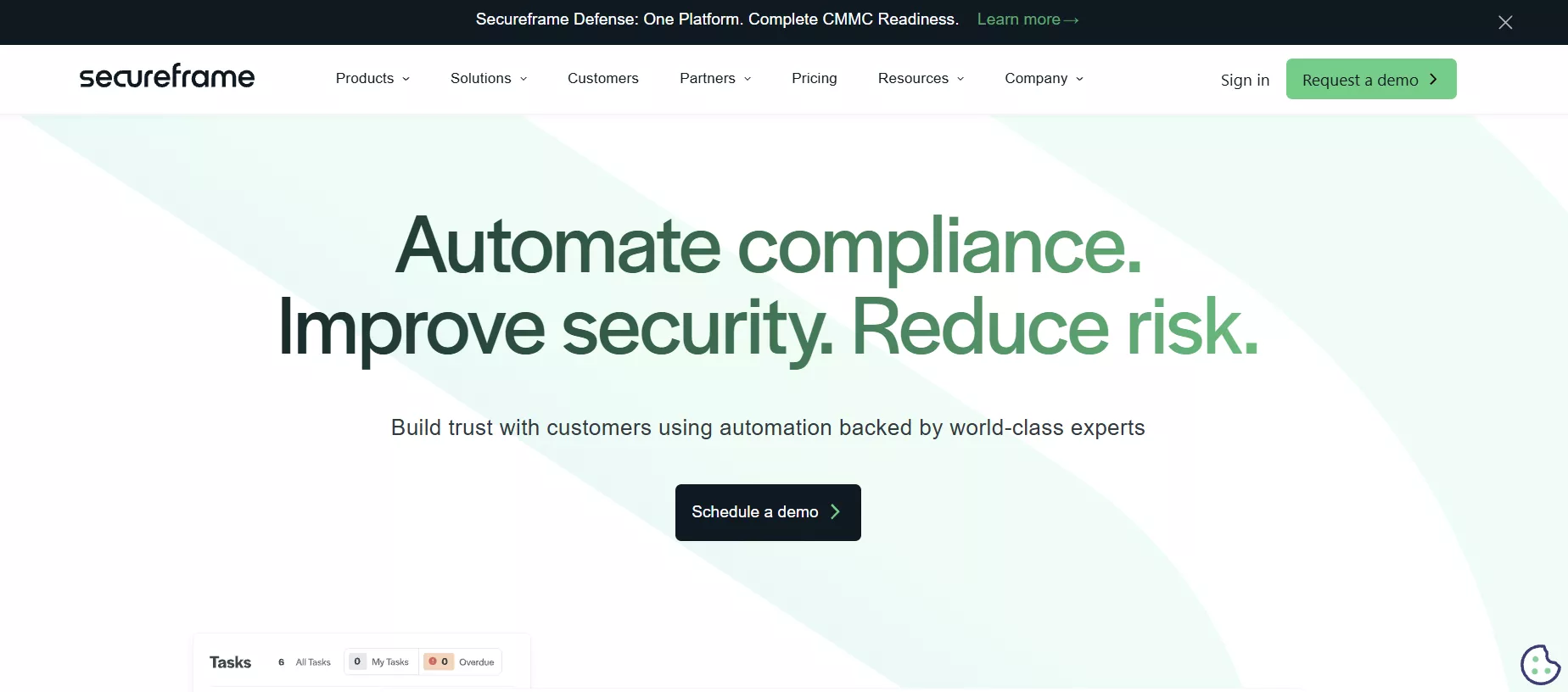
Secureframe combines compliance automation with built-in security training and vendor risk management, giving growing companies a single platform to manage certifications, employee policies, and third-party risk simultaneously.
Pros:
- Bundles security awareness training directly into the compliance workflow.
- Strong vendor risk management module included in core plans.
Cons:
- Some advanced integrations require higher-tier plans.
- Newer platform with a smaller partner and auditor network than Vanta or Drata.
Pricing:
Custom pricing based on frameworks and scope; demo required for quotes.
4. OneTrust
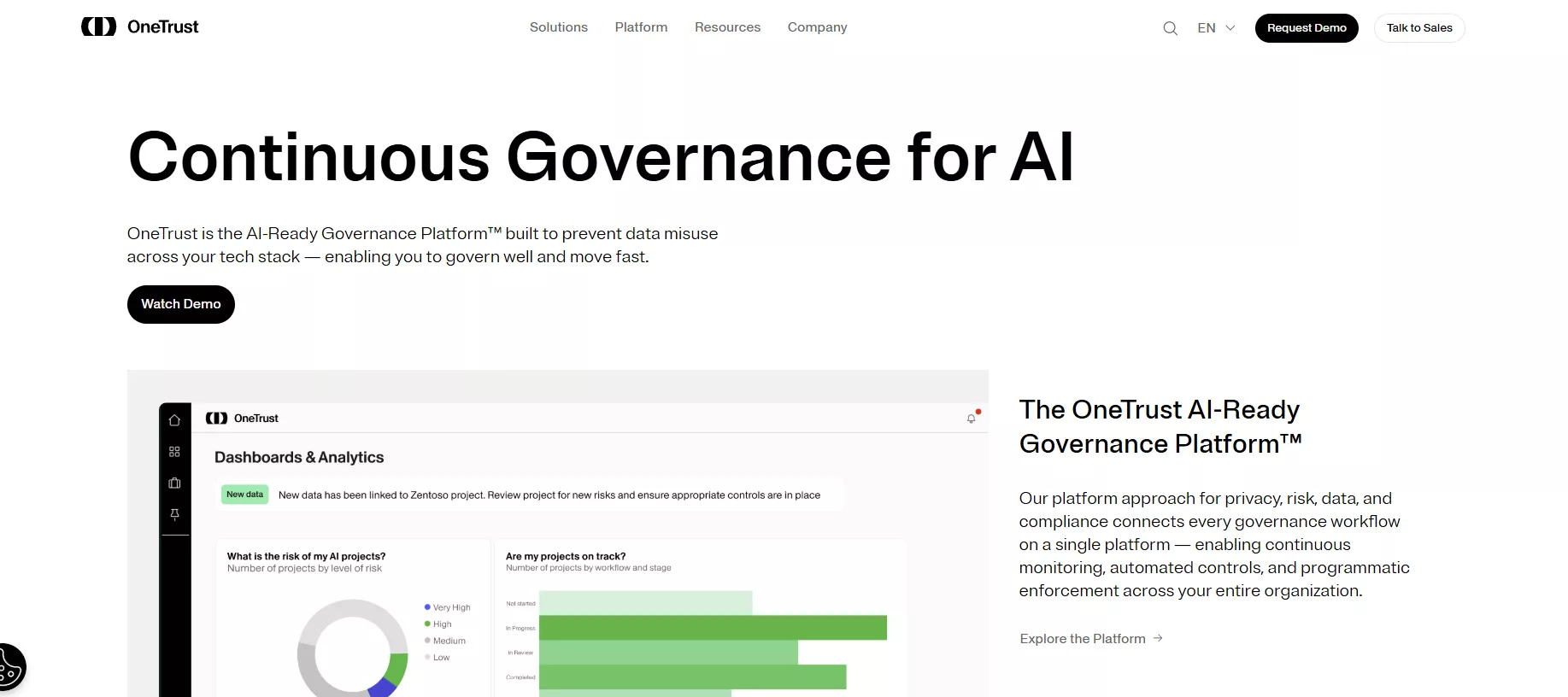
OneTrust brings deep privacy and data governance expertise to compliance management, offering a unified platform to manage regulatory obligations, privacy assessments, and risk across global frameworks like GDPR, CCPA, and the EU AI Act.
Pros:
- Best-in-class for privacy compliance and global regulatory mapping.
- Broad modular ecosystem covering risk, third-party management, and governance.
Cons:
- Pricing is on the higher end — best suited for mid-market and enterprise budgets.
- Implementation can be complex given the breadth of available modules.
Pricing:
Custom enterprise pricing; typically starts in the $40K–$150K/year range.
5. MetricStream
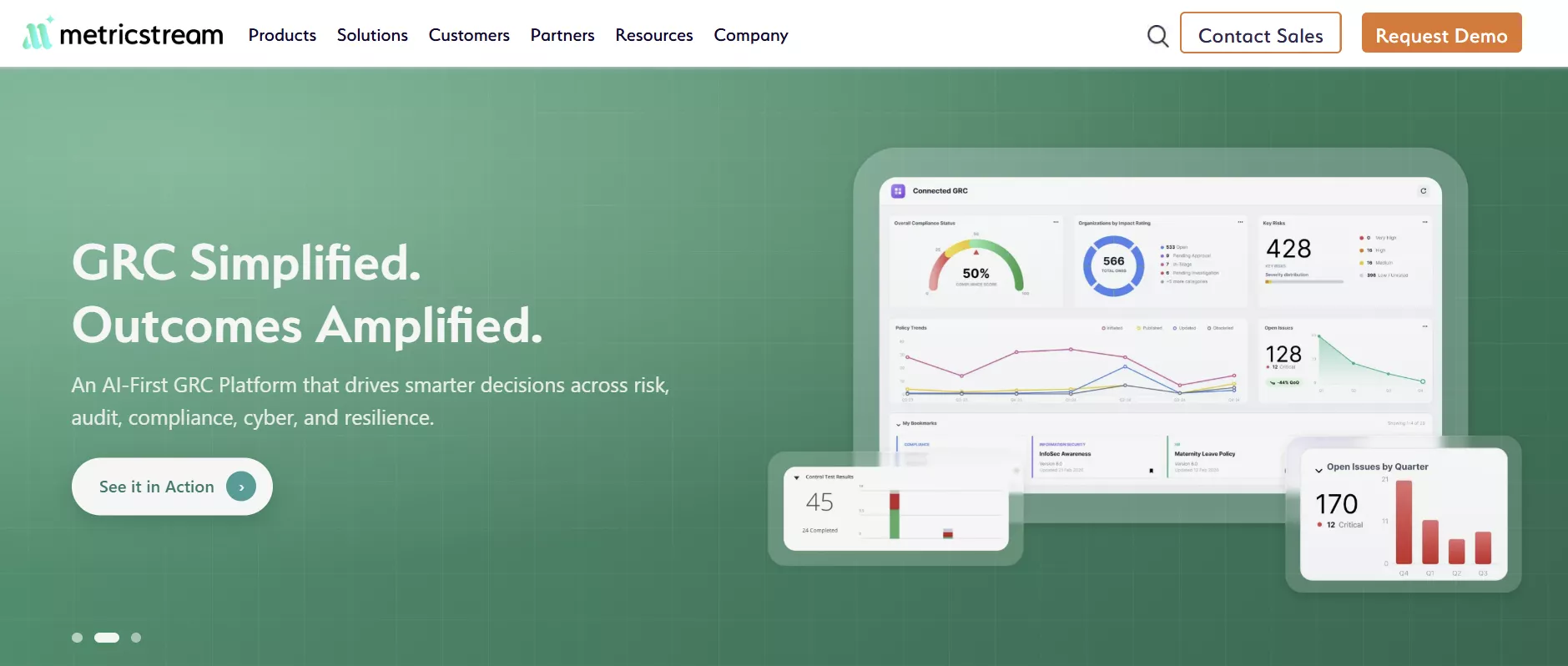
MetricStream is a full-stack governance, risk, and compliance (GRC) platform built for large, regulated enterprises, offering comprehensive compliance program management, policy administration, and audit management across multiple business units and jurisdictions.
Pros:
- Enterprise-grade GRC coverage spanning compliance, risk, and audit management.
- Strong fit for multinational organizations with complex regulatory footprints.
Cons:
- High cost of ownership — best suited for large enterprises with dedicated GRC teams.
- Implementation timelines can be lengthy given the platform’s scope.
Pricing:
Custom enterprise pricing; typically starts at $75K/year and scales with modules.
6. Hyperproof
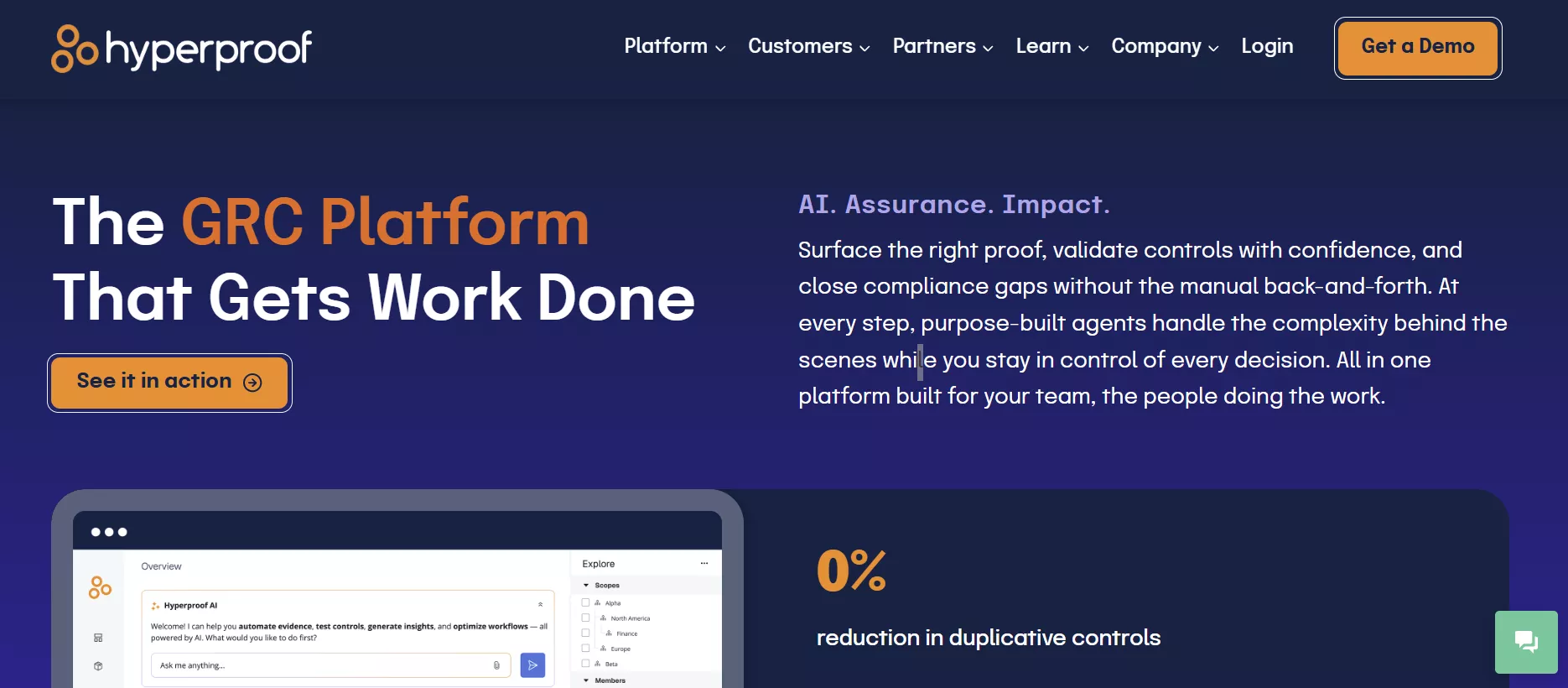
Hyperproof is built around the concept of “compliance operations,” giving teams a structured workspace to manage controls, collect evidence, track risk, and collaborate across departments — all while cutting down the manual work typically required for multi-framework audits.
Pros:
- Strong cross-framework control mapping reduces duplicate compliance work.
- Collaborative workflows make it easy to involve non-compliance stakeholders.
Cons:
- Less focused on automated evidence collection than Vanta or Drata.
- Pricing is quote-based, requiring a sales conversation for budgeting.
Pricing:
Custom pricing based on team size and frameworks; demo required for quotes.
7. Compyl

Compyl centralizes compliance programs across 70+ frameworks including SOC 2, ISO 27001, HIPAA, PCI DSS, GDPR, and NIST, with pre-mapped controls and cross-framework mapping that eliminate redundant work for organizations managing multiple certifications.
Pros:
- Extensive pre-mapped control library covering 70+ regulatory frameworks.
- Real-time dashboards keep compliance status visible year-round, not just before audits.
Cons:
- Newer entrant with a smaller market presence than established competitors.
- Pricing transparency is limited — requires direct contact for quotes.
Pricing:
Custom pricing based on frameworks and organization size; demo required.
8. Wolters Kluwer TeamMate

Wolters Kluwer TeamMate integrates compliance management directly into a broader GRC program, offering automated evidence collection, control mapping, and multi-framework support for internal audit and compliance teams operating at enterprise scale.
Pros:
- Deep integration between internal audit and compliance management workflows.
- Trusted brand with decades of experience in enterprise governance and risk.
Cons:
- Best suited for large enterprises with dedicated audit and compliance functions.
- Less agile than newer, cloud-native compliance automation platforms.
Pricing:
Custom enterprise pricing available upon request.
9. RapidFire Tools Compliance Manager GRC
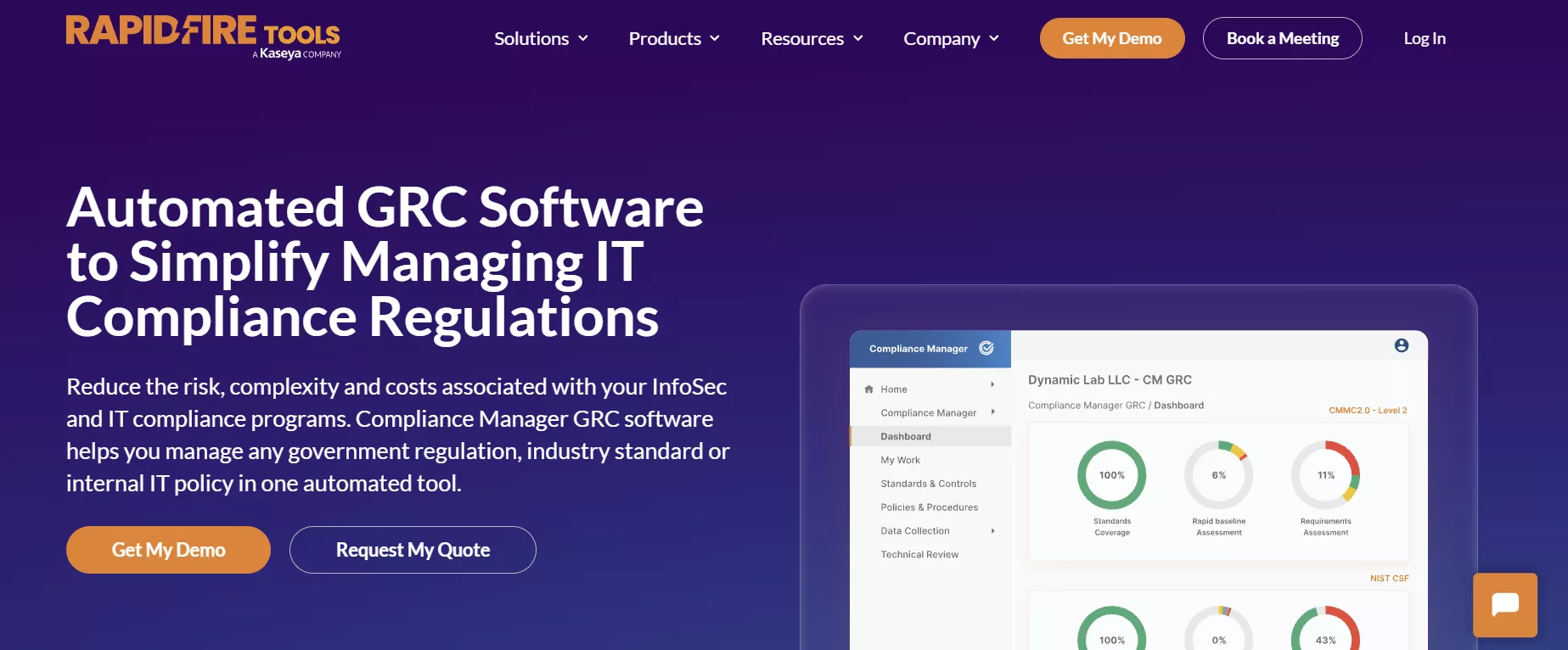
RapidFire Tools’ Compliance Manager GRC is purpose-built for IT service providers and internal IT teams, combining network risk assessments with compliance tracking to help organizations meet regulatory requirements from an IT operations perspective.
Pros:
- Strong fit for MSPs and IT teams managing compliance across client environments.
- Combines technical risk assessment with compliance documentation in one tool.
Cons:
- More IT-operations focused than policy or privacy-focused compliance needs.
- Smaller ecosystem of integrations compared to larger GRC platforms.
Pricing:
Custom pricing available upon request.
How to Choose the Best Compliance Management Software
With dozens of compliance platforms on the market, the right choice isn’t the one with the most frameworks listed — it’s the one that fits your industry, team size, and audit timeline. Here are the six most important criteria to evaluate before committing.
① Start With Your Target Frameworks
If you’re pursuing SOC 2 or ISO 27001 as a SaaS company, platforms like Vanta, Drata, and Secureframe are purpose-built for that journey. If you operate under multiple global regulations — GDPR, HIPAA, PCI DSS, and industry-specific rules — a broader GRC platform like OneTrust or MetricStream will serve you better. List your required frameworks before comparing tools; it will immediately narrow your options.
② Evaluate Evidence Automation Depth
The biggest time-saver in modern compliance software is automated evidence collection — pulling proof directly from your cloud providers, HR systems, and IT tools instead of manual screenshots. Check how many integrations a platform supports out of the box and whether it can monitor controls continuously rather than only at audit time.
③ Consider Your Organization’s Size and Maturity
Startups and mid-market SaaS companies typically get the most value from lean, automation-first platforms like Vanta or Drata. Large enterprises with dedicated compliance, risk, and audit teams often need the depth of a full GRC suite like MetricStream or Wolters Kluwer TeamMate. Buying more platform than your team can operate leads to underused features and wasted budget.
④ Check Auditor and Partner Compatibility
A strong compliance platform should make life easier for your external auditors too. Look for tools with an established auditor network or direct integrations with audit firms — this can shorten your audit timeline significantly. Ask your chosen auditor which platforms they’ve worked with before making a final decision.
⑤ Factor in Cross-Framework Efficiency
If you expect to add more certifications over time — for example, starting with SOC 2 and later adding ISO 27001 or HIPAA — prioritize platforms with strong cross-framework control mapping. Tools like Compyl and Hyperproof are built specifically to let one control satisfy multiple frameworks, cutting duplicate work significantly as your compliance program grows.
⑥ Run a Real Audit Cycle Before Committing
Whenever possible, trial a platform through at least one real monitoring cycle before signing a long-term contract. Connect your actual cloud environment, invite your compliance owner, and test how quickly the platform flags a failing control. A demo environment will always look clean — your real infrastructure is the true test.
Compliance is no longer a once-a-year scramble — it’s an ongoing operational discipline that protects your customers, your data, and your ability to close enterprise deals. The platforms in this guide represent the most capable, proven solutions available in 2026 for building a continuous, audit-ready compliance program.
Whether you need lightweight automation to earn your first SOC 2 certification, or a full enterprise GRC suite to manage risk across global operations, the right tool exists for your team’s size and regulatory exposure. The key is to start now — because the cost of a failed audit or a missed control is always higher than the software that would have prevented it.
At Infomineo, we help organizations navigate technology decisions through rigorous research, competitive benchmarking, and strategic advisory — ensuring your compliance investments are grounded in data, not vendor marketing.
Need help evaluating compliance management software for your organization? Our research experts are ready.
Get in Touch →