

Best AI-Powered Competitive Intelligence Tools in 2026

Table of Contents
In today’s hyper-competitive markets, knowing what your rivals are doing, before they do it, is no longer a luxury. It’s a survival skill. AI-powered competitive intelligence tools have fundamentally transformed how businesses monitor competitors, track market shifts, and respond to threats in real time. Gone are the days of manually scanning news feeds, copying pricing tables into spreadsheets, and guessing what your competitors will do next.
Modern AI competitive intelligence platforms automatically monitor thousands of data signals across websites, pricing pages, job postings, product launches, social media, financial filings, review platforms, and news sources, synthesizing raw data into actionable insights in minutes. For sales teams, that means sharper battlecards and higher win rates. For strategy teams, it means faster, evidence-based decisions. For marketing teams, it means messaging that lands because it’s built on real competitive context.
We’ve curated 15+ leading AI-powered competitive intelligence tools that are redefining how organizations track, understand, and outmaneuver their competition. Each platform has been selected for its practical impact from real-time competitor monitoring and automated battlecard generation to deep financial intelligence and SEO gap analysis. Whether you’re a B2B sales team trying to win more deals, a strategy team mapping the competitive landscape, or a marketer trying to dominate your category, these tools are the gold standard for 2026.
The intelligence advantage is the new competitive moat and it starts here.
What Are AI-Powered Competitive Intelligence Tools?
AI-powered competitive intelligence tools are software platforms that use artificial intelligence, machine learning, and natural language processing to automatically collect, analyze, and surface insights about competitors, markets, and industry trends. Rather than relying on manual research and periodic reports, these platforms deliver continuous, real-time intelligence drawn from thousands of public and proprietary data sources simultaneously.
At their core, these platforms cover five key intelligence pillars: competitor monitoring (tracking website changes, product updates, pricing shifts, and messaging pivots), market intelligence (identifying industry trends, regulatory changes, and emerging threats), sales enablement (generating battlecards, win/loss insights, and objection-handling frameworks), digital intelligence (analyzing SEO, traffic, ad spend, and content performance), and financial intelligence (monitoring earnings calls, regulatory filings, and analyst reports for strategic signals).
The distinction between platform categories is critical. Enterprise CI platforms like Crayon and Klue are built for cross-functional programs with dedicated CI teams. Digital intelligence tools like Semrush and Similarweb focus on traffic, SEO, and ad data. Financial intelligence platforms like AlphaSense are built for deep research teams and analysts. Point solutions like SpyFu and BuzzSumo solve specific problems affordably. Choosing the right type depends entirely on your team’s job to be done.
📖 Want to build a complete intelligence framework? Read our comprehensive guide on AI governance and documentation to understand how to manage your AI-powered tools responsibly: AI Governance Documentation: A Practical Guide for 2026 →
Best AI-Powered Competitive Intelligence Tools in 2026
The goal of competitive intelligence is not to spy on your competitors — it is to understand the market so well that you can anticipate the future before it happens.
1. Crayon
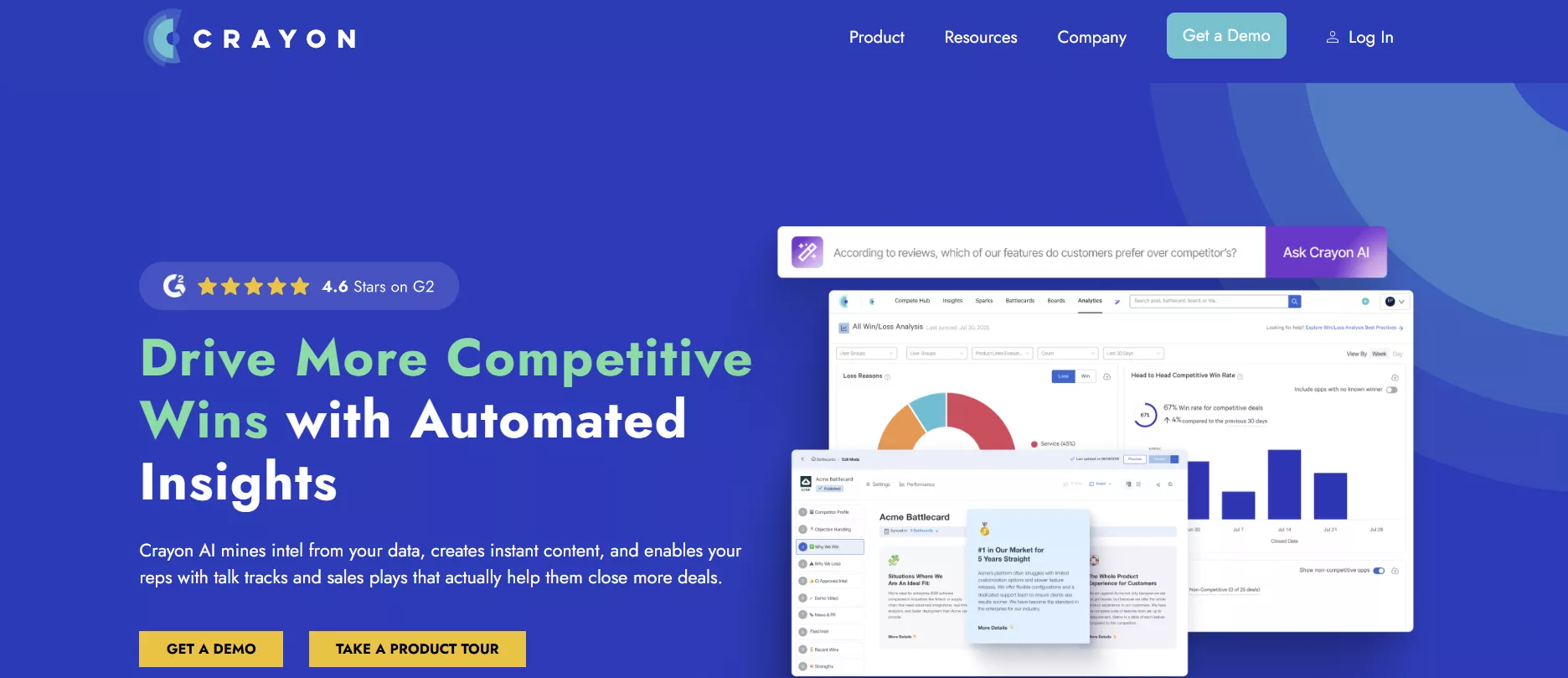
Crayon is the enterprise standard for AI-powered competitive intelligence, automatically tracking competitor activity across websites, pricing pages, product releases, job postings, G2/Capterra reviews, social media, and news — then using AI to categorize signals by strategic relevance and surface them through battlecards, dashboards, and automated alerts to sales and marketing teams.
Pros:
- Best-in-class real-time competitor change detection across 100+ data source types.
- AI-powered battlecard automation with CRM and Salesforce integration.
Cons:
- High entry cost — not accessible for small teams or startups.
- Requires a dedicated CI owner to extract full strategic value.
Pricing:
Starts at ~$15,000–$20,000/year; enterprise contracts range $30,000–$100,000+/year. Quote-based only.
2. Klue
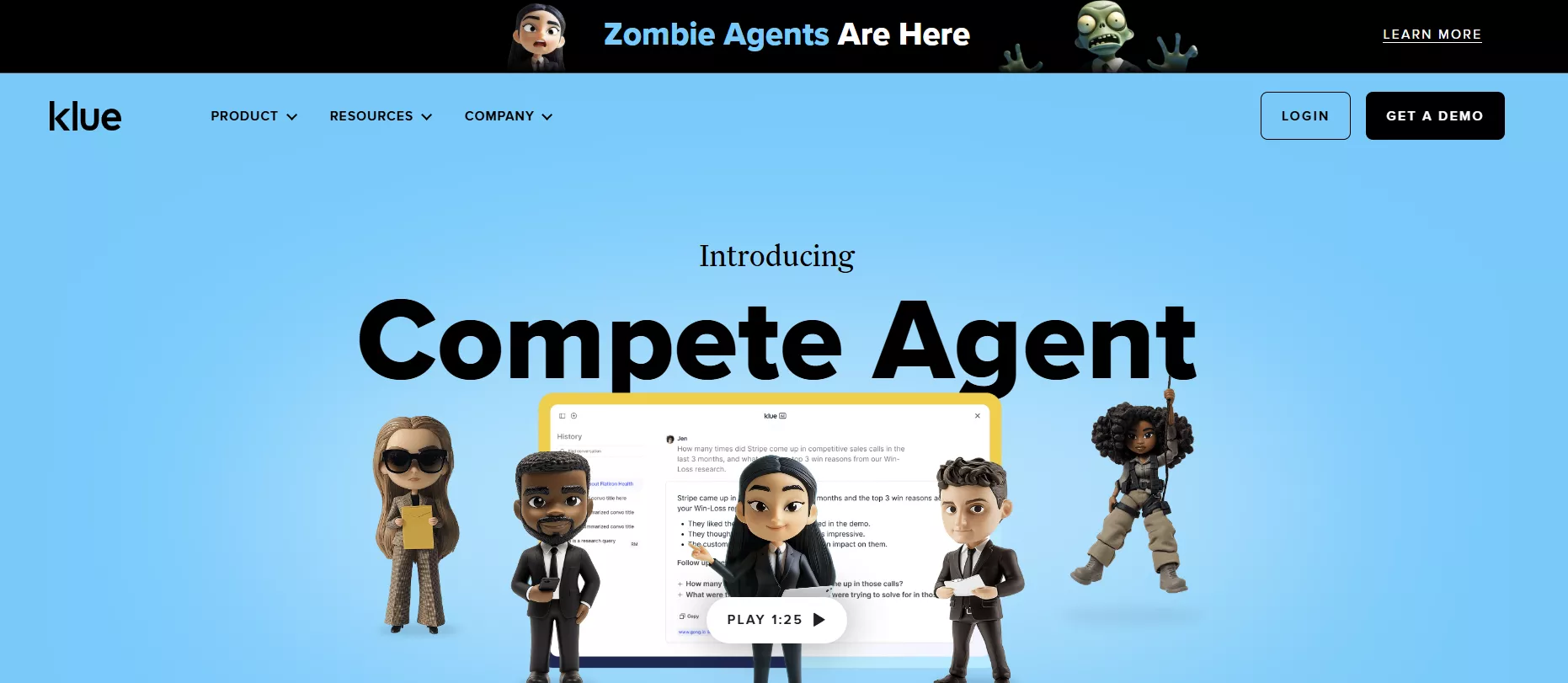
Klue is the category leader for sales-first competitive intelligence, rated 4.8/5 on G2, the highest in its category. It combines automated competitor tracking with win/loss analysis and revenue enablement tools, delivering curated battlecards directly into the workflows of sales reps where they actually need them: inside Salesforce, Slack, and Chrome.
Pros:
- Highest-rated CI platform on G2 (4.8/5) — exceptional sales enablement focus.
- Native win/loss analysis integrated with competitive battlecards in one platform.
Cons:
- Primarily sales-centric — less suited for strategy or market research teams.
- Requires significant internal CI content contributions to deliver best results.
Pricing:
Starts at ~$16,000–$20,000/year. Essentials, Professional, and Enterprise tiers — all quote-based.
3. Semrush
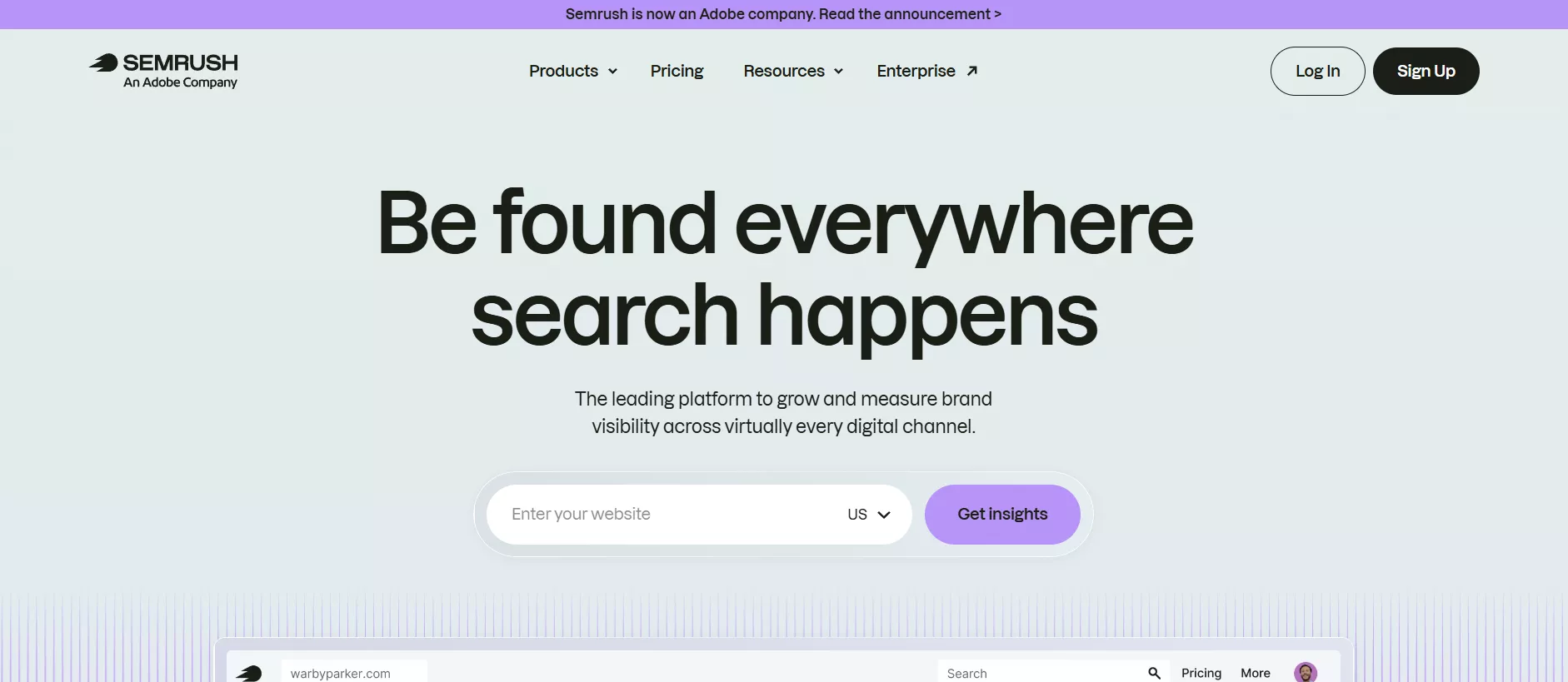
Semrush is the most widely used all-in-one digital competitive intelligence platform, giving marketing and SEO teams unparalleled visibility into competitor keyword strategies, ad spend, backlink profiles, content performance, and market share based on search visibility all underpinned by one of the largest keyword databases in the world with over 25 billion keywords tracked.
Pros:
- Unmatched keyword and SEO competitive intelligence — 25B+ keyword database.
- Transparent, accessible pricing with a free trial — rare in the CI category.
Cons:
- Focused on digital/marketing intelligence — not a full CI platform for sales or strategy.
- Data can lag for very new or niche competitors with limited digital footprint.
Pricing:
Pro $117/mo | Guru $208/mo | Business $417/mo (billed annually). Free trial available.
4. Similarweb
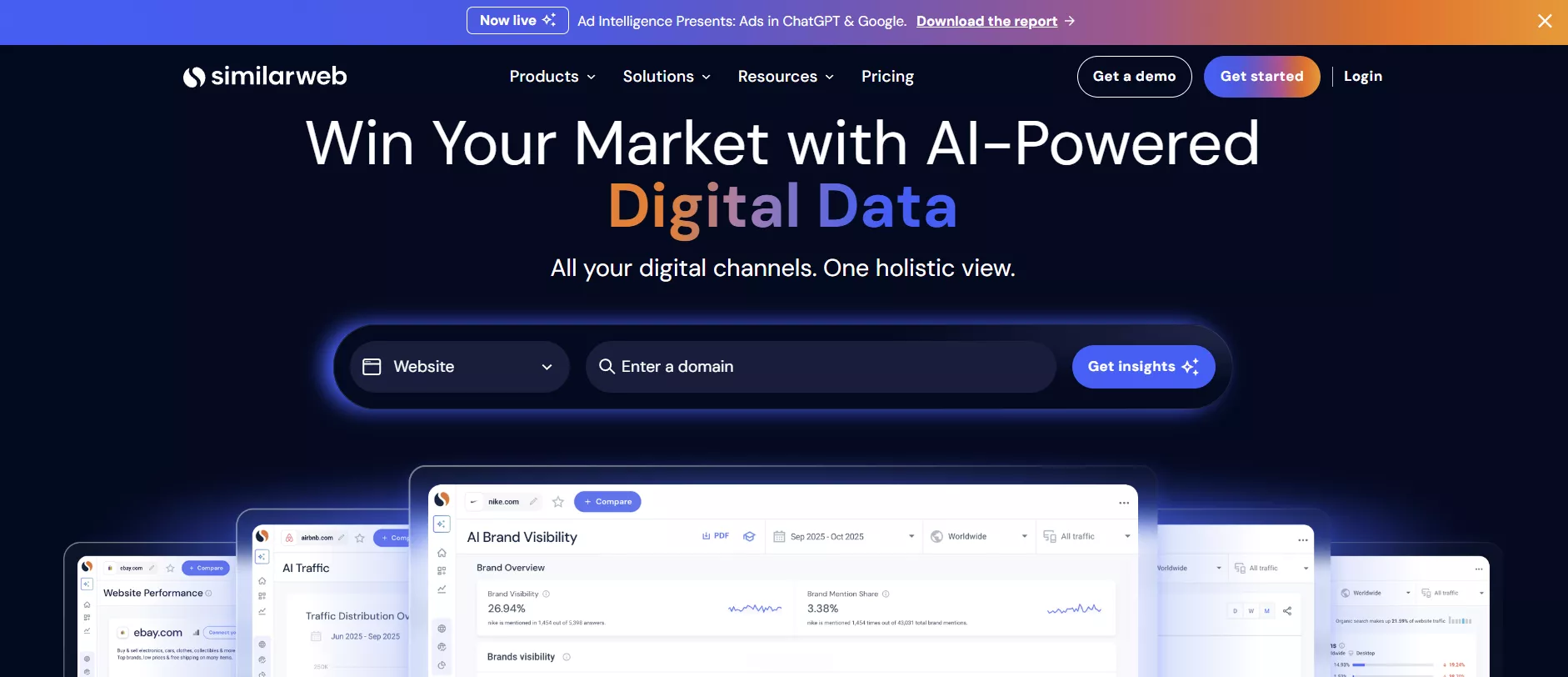
Similarweb is the definitive platform for digital market intelligence, offering unrivaled visibility into competitor website traffic, audience demographics, traffic sources, engagement metrics, and market share benchmarking across industries. Its AI-powered benchmarking engine lets strategy and business development teams measure their digital position against any competitor with precision that no other tool matches.
Pros:
- Gold standard for digital traffic and market share intelligence — no close competitor.
- Audience insight data (demographics, interests) unavailable in most CI platforms.
Cons:
- Traffic estimates can be less accurate for smaller or regional websites.
- Enterprise pricing is steep — better value for large-scale market analysis teams.
Pricing:
Starter plan from ~$125/mo; Professional and Enterprise plans are quote-based. Limited free version available.
5. AlphaSense
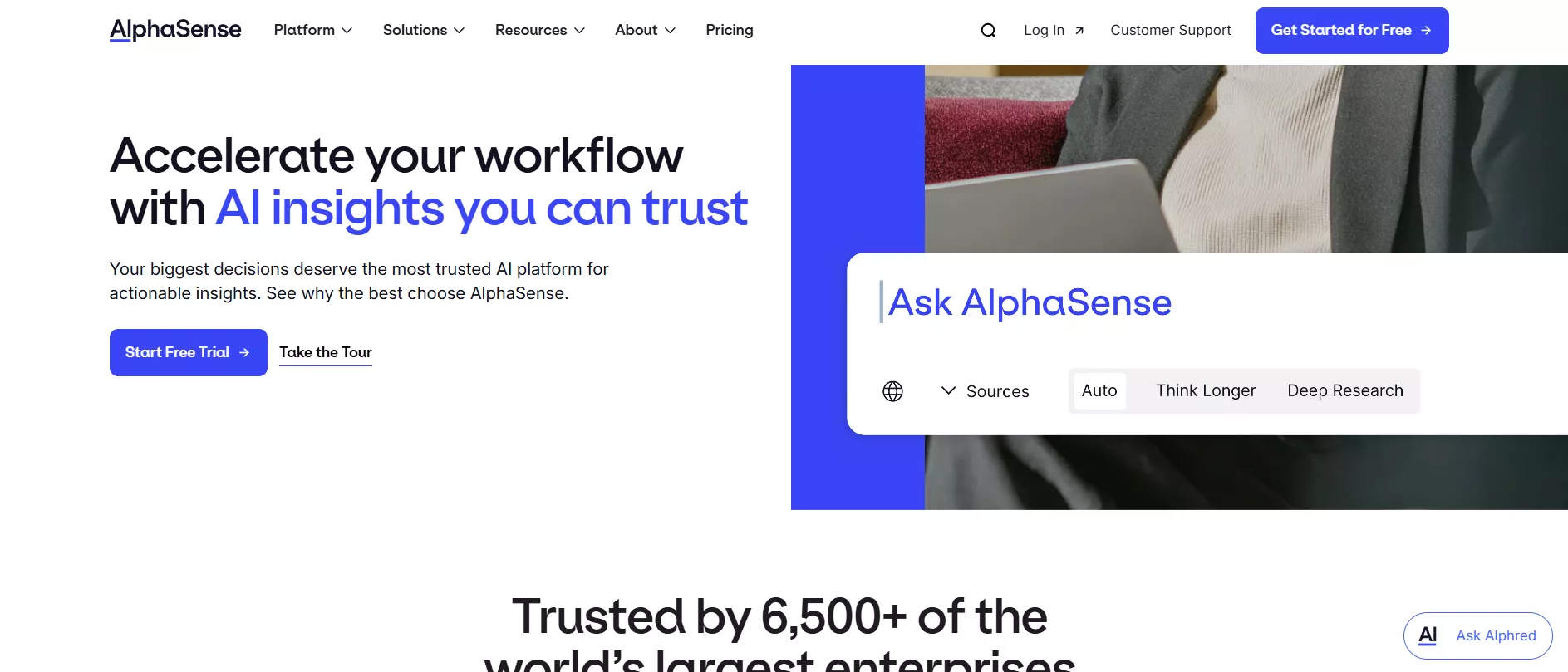
AlphaSense is the gold standard for financial and strategic competitive intelligence, using AI-powered semantic search to surface insights buried in earnings call transcripts, SEC filings, analyst reports, expert interviews, and premium news sources. If a competitor mentions a new product line in a PDF footnote on page 47 of an earnings call transcript, AlphaSense finds it, making it indispensable for strategy, M&A, and financial research teams.
Pros:
- Unmatched depth for financial document intelligence — earnings calls, filings, analyst reports.
- AI semantic search surfaces insights that keyword tools completely miss.
Cons:
- Significant cost — best justified for dedicated research teams, not general CI use.
- Not designed for real-time website or social media competitor monitoring.
Pricing:
Starts at ~$12,000–$15,000/year; enterprise plans up to $51,000+/year. Quote-based.
6. Kompyte by Semrush
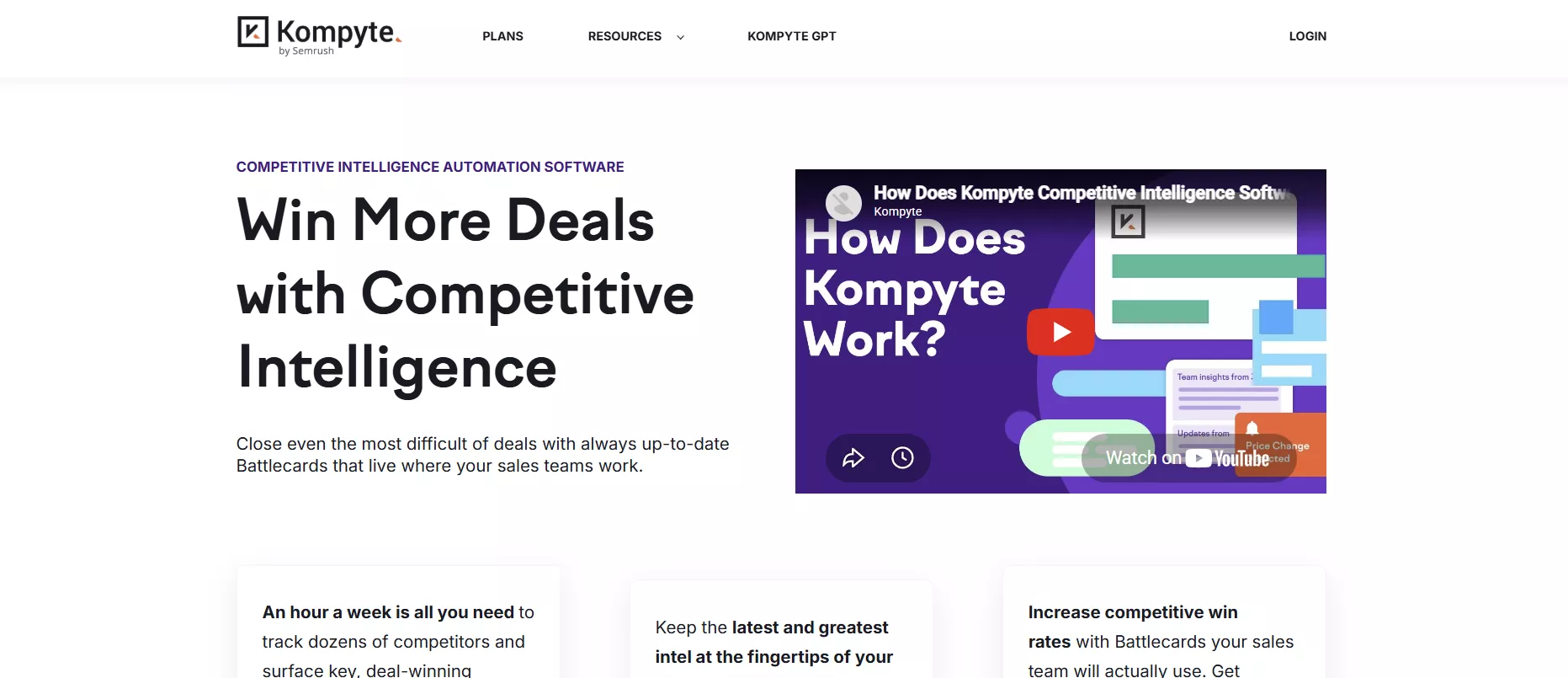
Kompyte is Semrush’s dedicated competitive intelligence module, offering automated competitor tracking, live website change detection, AI-generated battlecards, and sales intelligence tightly integrated with the broader Semrush ecosystem. For organizations already running Semrush, Kompyte provides CI capabilities at a significantly lower entry cost than standalone platforms like Crayon or Klue.
Pros:
- Best value CI platform for existing Semrush customers — native ecosystem integration.
- Automated battlecard generation and live competitor website change alerts.
Cons:
- Significantly less powerful than Crayon or Klue for enterprise-scale CI programs.
- Limited value for organizations not already in the Semrush ecosystem.
Pricing:
Custom pricing — typically lower than Crayon/Klue entry points. Requires Semrush subscription. Quote-based.
7. Contify
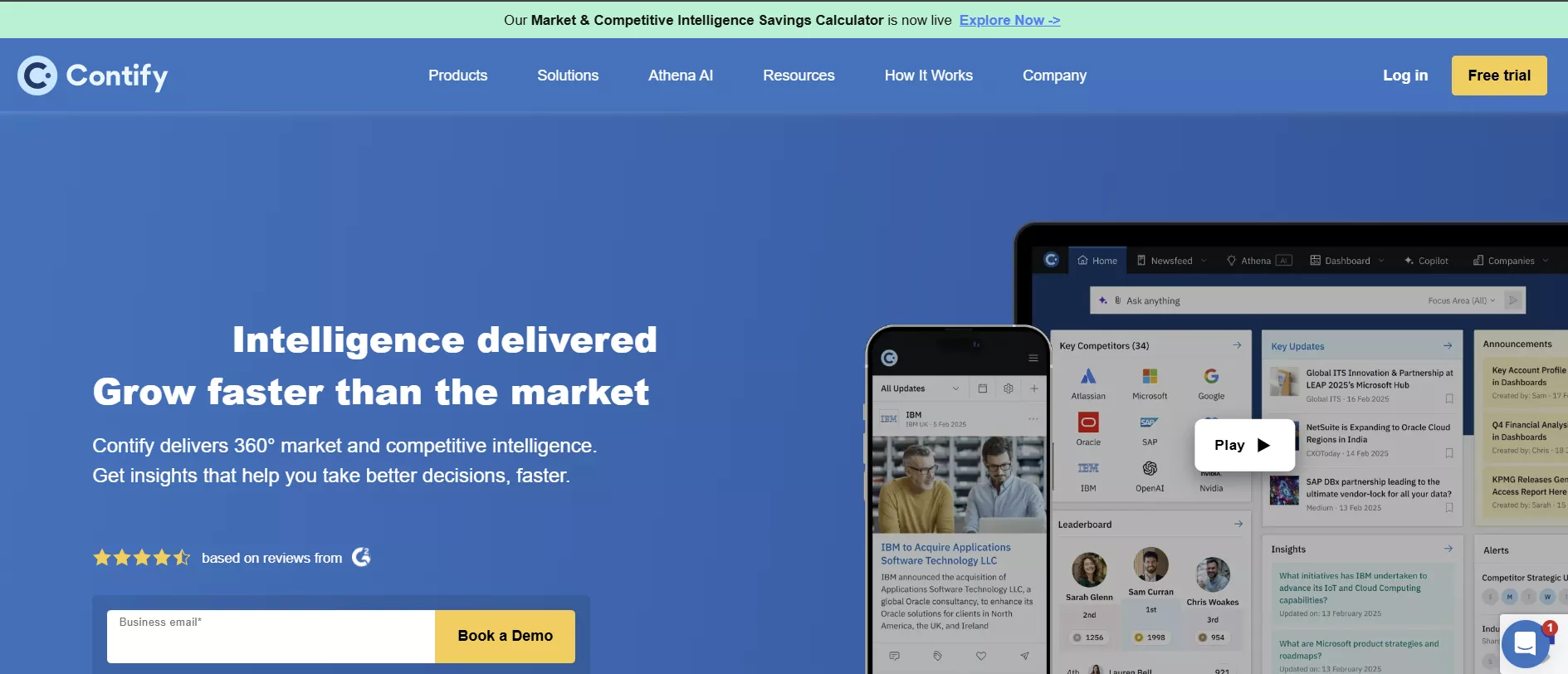
Contify is a market and competitive intelligence platform built for strategy, consulting, and enterprise teams that need to monitor not just competitors, but the entire competitive ecosystem, including customers, regulators, industry trends, and market developments. Its AI classifies and tags intelligence across custom taxonomies, making it exceptionally powerful for organizations tracking complex multi-player markets.
Pros:
- Broadest market coverage — monitors competitors, customers, regulators, and industry trends simultaneously.
- Custom AI taxonomies allow highly tailored intelligence classification for complex ecosystems.
Cons:
- Less focused on sales enablement than Klue or Crayon — better for strategy than revenue teams.
- UI can feel dense for teams new to formal CI programs.
Pricing:
Custom pricing; typical contracts ~$30,000/year. Free trial available upon request.
8. Visualping
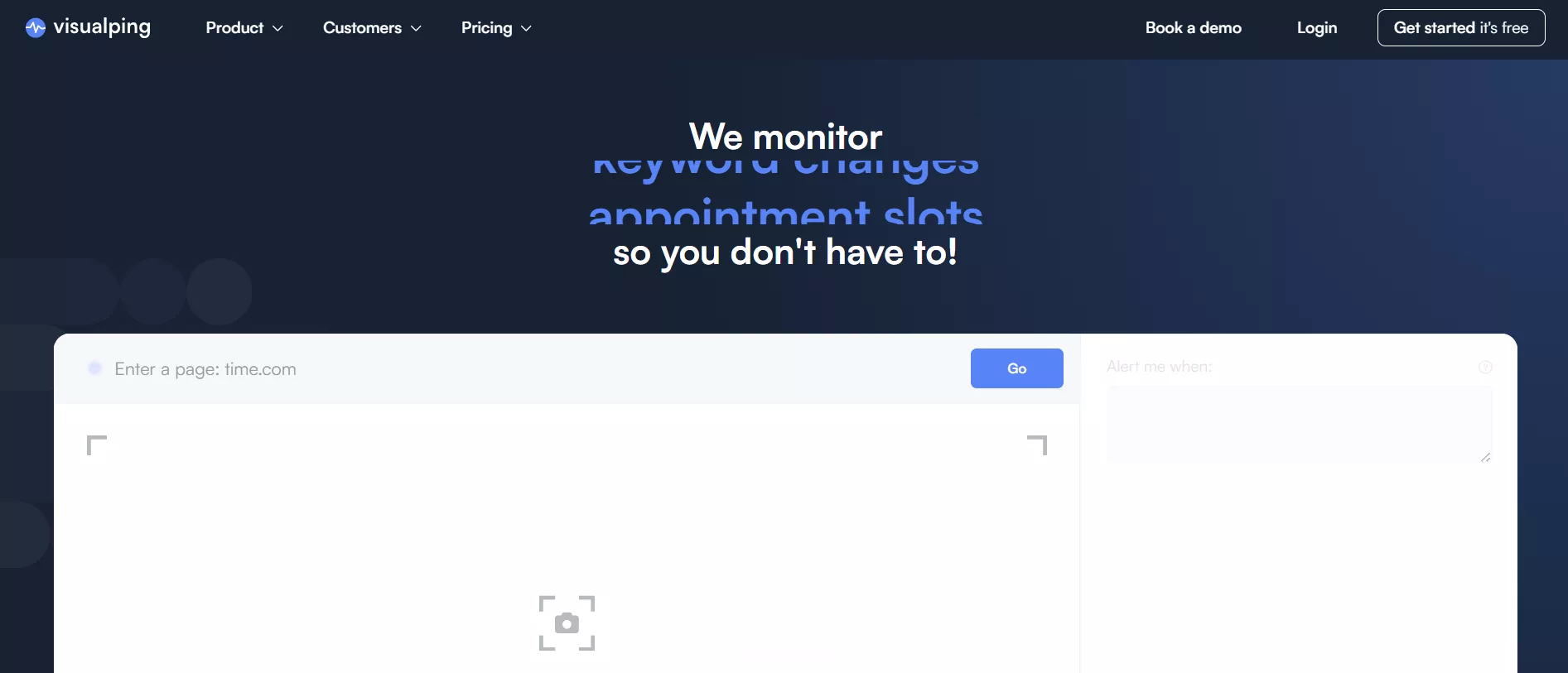
Visualping is the highest-rated tool on G2 in the competitive intelligence category for 2026 and it earned that reputation by doing one thing better than anyone else: detecting competitor website changes in real time. From pricing page updates and product messaging pivots to new landing pages and job postings, Visualping alerts teams the moment a competitor makes a move online.
Pros:
- G2’s Highest Performer in CI 2026 — best-in-class for website change detection.
- Extremely accessible pricing — powerful for SMBs and lean CI teams.
Cons:
- Focused on web monitoring only — not a full-stack CI platform.
- No battlecard generation, win/loss analysis, or sales enablement features.
Pricing:
Free plan available; paid plans from ~$10/mo up to ~$3,000/mo for enterprise-scale monitoring.
9. Ahrefs
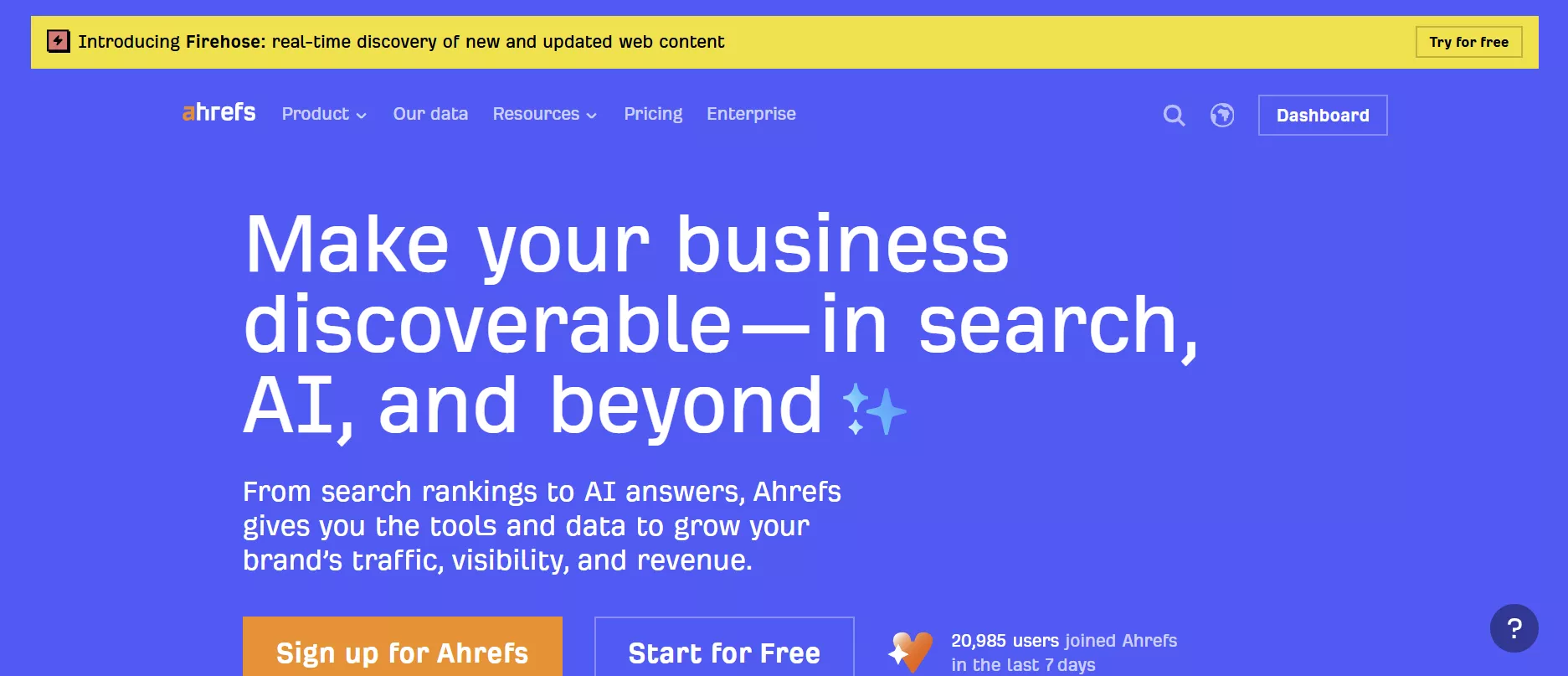
Ahrefs is the preferred competitive intelligence tool for SEO and content-driven teams, offering the most comprehensive backlink database in the industry alongside deep competitor keyword analysis, content gap identification, and organic traffic intelligence. Its Site Explorer tool gives teams a forensic view of exactly how any competitor is winning organic search and which opportunities they’re leaving on the table.
Pros:
- Industry-leading backlink database — unmatched for link-based competitive research.
- Content Gap tool instantly identifies keyword opportunities competitors rank for that you don’t.
Cons:
- Limited to SEO/content intelligence — no social, financial, or sales enablement features.
- No PPC ad intelligence compared to Semrush — weaker for paid search competitive analysis.
Pricing:
Lite $129/mo | Standard $249/mo | Advanced $449/mo | Enterprise $1,499/mo (billed annually).
10. SpyFu
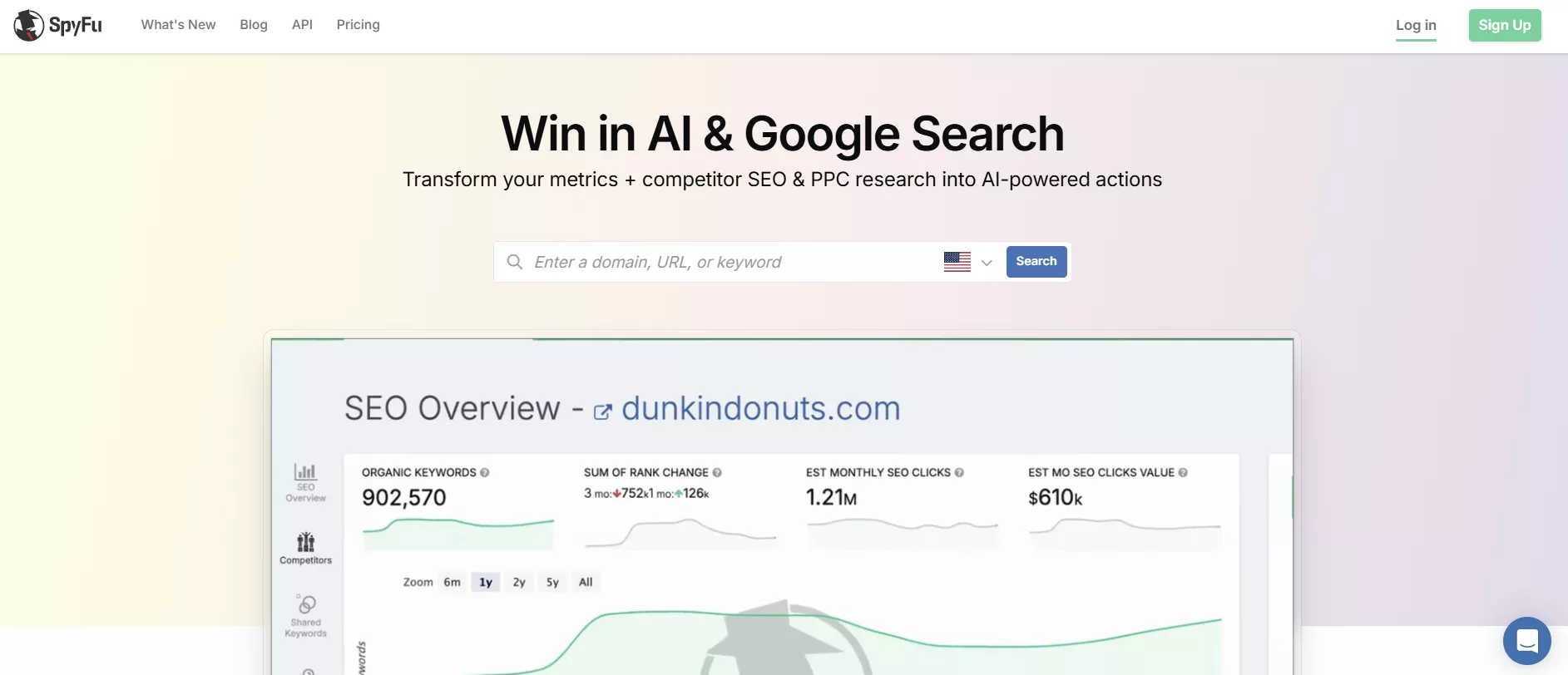
SpyFu is the most cost-effective PPC and SEO competitive intelligence tool available, giving marketers forensic visibility into competitor ad spend, keyword bids, ad copy history spanning over a decade, and organic ranking strategies all at a price point accessible to small and mid-sized businesses. Its Kombat keyword gap analysis tool and Ad History archive are unmatched at this price tier.
Pros:
- 10+ years of competitor PPC ad history — unique depth unavailable in most tools.
- Exceptional value for budget-conscious teams — powerful insights at SMB-friendly pricing.
Cons:
- Data accuracy can lag on less-trafficked or niche competitor domains.
- No real-time monitoring, battlecards, or sales enablement features.
Pricing:
Basic $39/mo | Professional $79/mo | Team $299/mo (billed annually). No free trial but offers free limited searches.
11. Brandwatch
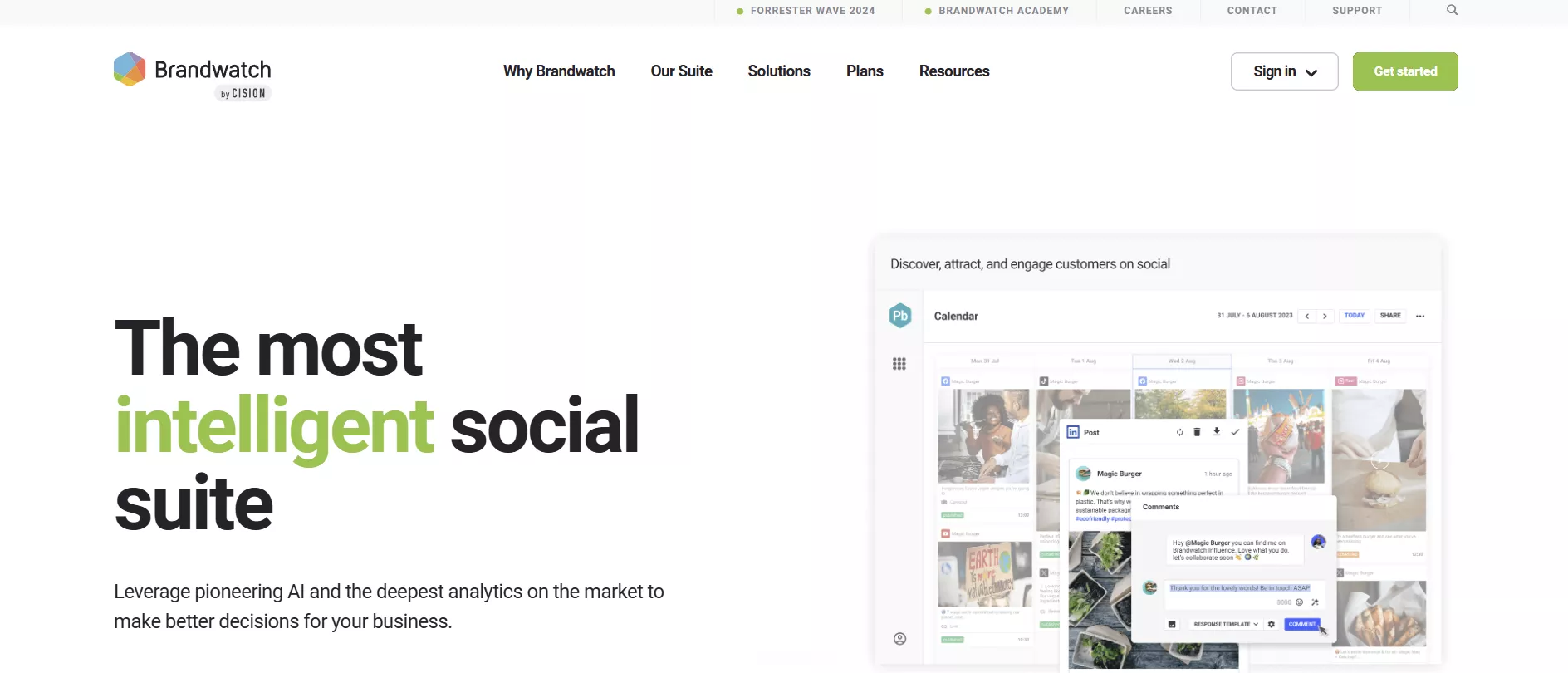
Brandwatch is the enterprise standard for social listening and consumer intelligence, monitoring competitor mentions, brand sentiment, and emerging narratives across social media, news, forums, and blogs in real time. Its AI-powered audience analysis gives marketing and brand teams a competitive edge in understanding not just what people say about competitors, but why and what emotions and signals are driving the conversation.
Pros:
- Premier social listening and consumer intelligence platform — unrivaled for brand-level CI.
- AI-driven audience segmentation and sentiment analysis across billions of social conversations.
Cons:
- Enterprise-only pricing — not accessible for small teams or SMBs.
- Focused on social and brand intelligence — not a substitute for SEO or product CI tools.
Pricing:
Enterprise pricing from ~$1,000/mo; full plans are quote-based. No public pricing.
12. BuzzSumo
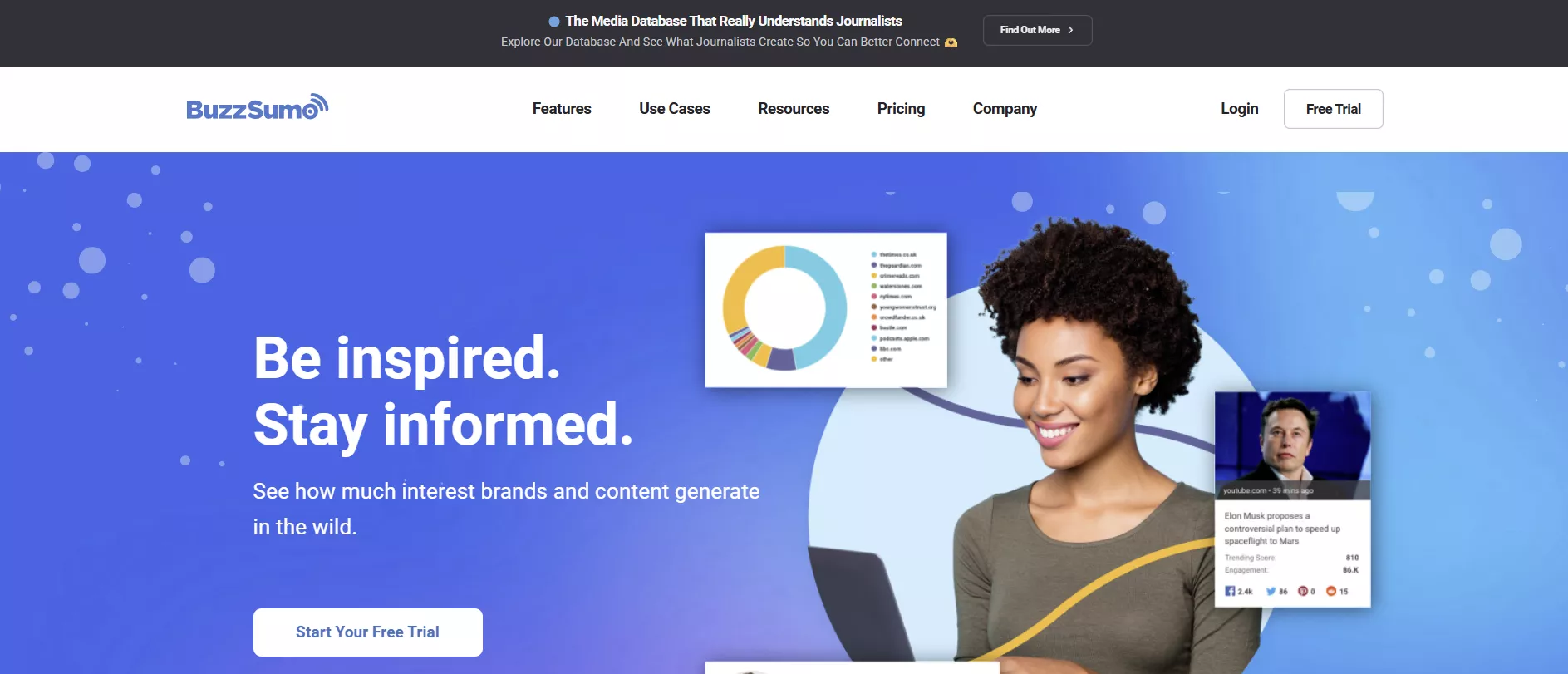
BuzzSumo is the go-to competitive intelligence tool for content marketers, revealing which competitor content earns the most shares, backlinks, and engagement — and why. Its trending content feeds, influencer discovery engine, and content performance benchmarking tools give content teams an unfair advantage in understanding what resonates in their market before investing in content creation.
Pros:
- Best tool for content performance competitive intelligence — unmatched for content strategy.
- Influencer discovery and PR monitoring built natively alongside CI features.
Cons:
- Limited to content and social intelligence — not suitable for product, pricing, or financial CI.
- Data depth on LinkedIn and newer social platforms is more limited than on Facebook/Twitter.
Pricing:
Content Creation $199/mo | PR & Comms $299/mo | Suite $499/mo | Enterprise $999+/mo (billed annually).
13. Owler
Owler is a business intelligence and competitor tracking platform built around a unique crowd-sourced data model and its proprietary Competitor Graph, which maps both direct and indirect rivals across industries. It excels at tracking company news, funding events, leadership changes, and market movements — making it particularly valuable for sales, business development, and account-based marketing teams needing company-level intelligence at scale.
Pros:
- Proprietary Competitor Graph maps indirect rivals others miss — unique market mapping capability.
- Free and affordable paid tiers make it accessible for any team size.
Cons:
- Crowd-sourced revenue and employee data can be inaccurate for private companies.
- Less depth than Crayon or Klue for product, messaging, and website CI.
Pricing:
Free plan available; Owler Pro from ~$35/mo; Owler Max from ~$50/mo. Enterprise plans available.
14. SparkToro
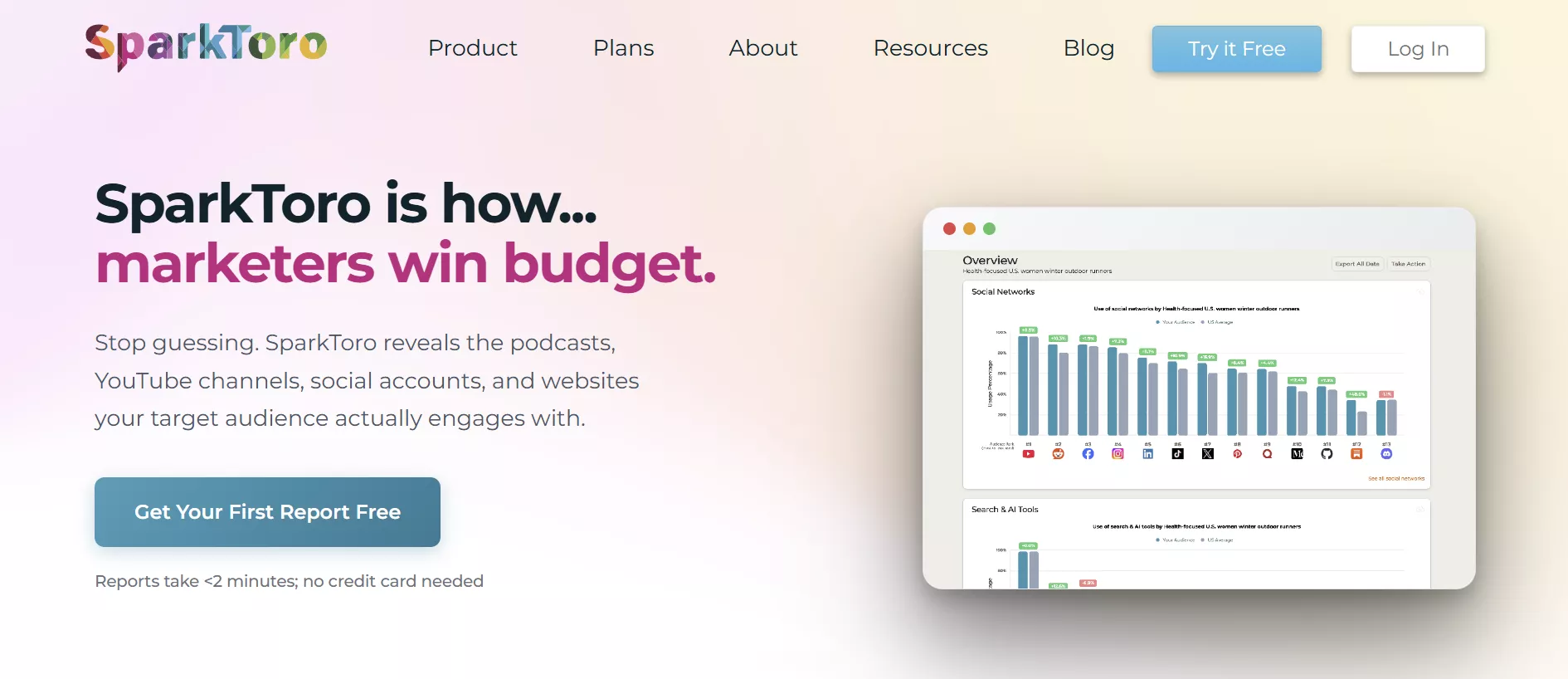
SparkToro is an audience intelligence platform that reveals where any target audience spends its time online — which websites they visit, podcasts they listen to, social accounts they follow, and content they engage with. For competitive intelligence, this means uncovering exactly which channels and influencers your competitors are targeting (or missing), giving your team a precise map for outflanking them in market reach.
Pros:
- Unique audience intelligence capability — reveals where competitor audiences actually live online.
- Excellent for identifying channel gaps and influencer whitespace your competitors are missing.
Cons:
- Audience data is US-centric — less reliable for international or niche markets.
- Not a traditional CI tool — complements rather than replaces competitor monitoring platforms.
Pricing:
Free plan (5 searches/mo); Basic $50/mo | Standard $150/mo | Premier $300/mo | Agency $900/mo.
15. Parano.ai
Parano.ai is an emerging modern continuous competitive intelligence platform built for the next generation of CI programs — combining automated multi-source monitoring with AI-generated intelligence briefs, competitor profiles, and strategic summaries that go far beyond raw data aggregation. Purpose-built for lean teams that need enterprise-grade CI without the enterprise-grade headcount, Parano.ai represents the new category of AI-native CI platforms for 2026.
Pros:
- AI-native architecture — generates synthesized intelligence briefs, not just raw data feeds.
- Designed for lean teams that need enterprise CI output without a dedicated CI analyst.
Cons:
- Newer platform — smaller integration ecosystem and less proven at large-scale enterprise deployments.
- Less name recognition means a shorter customer reference base for procurement validation.
Pricing:
Competitive with mid-market alternatives — contact for current pricing. Demo available on request.
How to Choose the Best AI Competitive Intelligence Tool
The most common mistake organizations make when evaluating competitive intelligence tools is shopping for features instead of jobs. With 15+ strong platforms available in 2026, the right choice isn’t the one with the longest feature list — it’s the one that solves your specific intelligence problem at your specific scale. Here are the six criteria that matter most.
① Start With Your Primary Use Case
Are you trying to win more deals (choose Klue or Crayon), track digital market share (Semrush, Similarweb), monitor financial intelligence (AlphaSense), detect website changes (Visualping), or understand content and social performance (BuzzSumo, Brandwatch)? The right tool should be built around your primary job — a Swiss Army knife that does everything mediocrely is almost always worse than a specialized tool that excels at your core need.
② Match the Platform to the Team That Will Use It
Sales teams need battlecards delivered inside Salesforce and Slack (Klue, Crayon, Kompyte). Marketing teams need keyword and ad intelligence (Semrush, Ahrefs, SpyFu). Strategy and corporate development teams need financial filings and expert network research (AlphaSense). Content teams need to know what earns shares and links (BuzzSumo). A platform purchased for one team that another team is supposed to maintain will never be adopted — align the tool to the consumer.
③ Assess How Many Competitors You Need to Track
Pricing on enterprise CI platforms like Crayon and Klue scales heavily with the number of tracked competitors — not just user seats. If you need to monitor 5 competitors, the economics look very different than monitoring 50. Platforms like Semrush, Ahrefs, and Visualping are generally unlimited in scope for digital data. Clarify your competitor tracking scope before requesting enterprise quotes, as this single variable can double or triple the contract value.
④ Evaluate CRM and Stack Integration Depth
Competitive intelligence only creates value when it reaches the people making decisions — and that requires deep integration with existing workflows. Verify native integrations with your CRM (Salesforce, HubSpot), sales enablement tools (Highspot, Seismic, Showpad), and communication platforms (Slack, Teams). Klue and Crayon lead on sales stack integrations. Semrush and Ahrefs integrate well with content and marketing tools. A CI platform that sits in its own silo rarely drives behavior change.
⑤ Demand Transparent Data Freshness and Source Coverage
Not all intelligence is equal — stale data is worse than no data because it generates false confidence. Before committing to any platform, ask vendors specifically: how frequently are competitor websites crawled? How old is the traffic data? How are financial documents sourced and updated? Platforms like Visualping and Crayon monitor in near real-time. Similarweb traffic data is typically delayed by 4–6 weeks. AlphaSense updates financial filings within hours of publication. For fast-moving markets, data freshness is non-negotiable.
⑥ Run a Structured POC Against a Real Competitor
Before signing any annual contract, insist on a 2–4 week proof of concept using a real competitor from your market. Run actual intelligence workflows — set up monitoring, generate a battlecard, pull a competitor traffic analysis, test the alert quality. Involve the end users who will own the platform day-to-day, not just procurement. A CI tool that impresses in a vendor demo but fails to surface actionable intelligence on your actual competitive landscape will deliver zero ROI — no matter how well the sales deck looks.
Competitive intelligence is no longer a quarterly report — it’s a continuous, AI-driven capability that separates organizations that anticipate market moves from those that react to them. The platforms in this guide represent the most powerful tools available in 2026 for building a real, sustained intelligence advantage across sales, marketing, strategy, and product teams.
Whether you need enterprise battlecard automation to win more deals, deep digital benchmarking to dominate search, or financial document intelligence to outmaneuver competitors in the boardroom — the right tool exists for your organization’s specific competitive reality. The key is to stop treating CI as a project and start building it as a program.
At Infomineo, we help organizations build competitive intelligence capabilities through deep primary and secondary research, market mapping, and strategic advisory — delivering the intelligence your team needs to make faster, sharper decisions with confidence.
Ready to build a world-class competitive intelligence program? Our analysts are here to help.
Get in Touch →